Wrought Iron Fence Installation in Massachusetts: Footings, Freeze-Thaw & Gates
Wrought iron fence installation in MA runs a ballpark $2,500-$12,000 and lives or dies on frost-line footings and plumb posts. Here's what the job really involves and why it's a pro job.

Quick answer: A proper wrought iron fence installation in Massachusetts is not a weekend project. It means setting posts on footings dug below the frost line, keeping every post dead plumb, welding panels square, hanging gates on hardware that won't sag, and finishing the steel so it survives New England salt and freeze-thaw. As a typical ballpark, fences run $2,500-$12,000, manual gates $800-$2,500, and automated driveway gates $3,500-$9,000 — a range the local pro you're matched with confirms after an on-site measure. Do it right the first time and it lasts decades; do it cheap and it heaves, rusts, and sags within a few winters.
Mass Ironworks doesn't fabricate or install anything itself. We're a connector: we match you with a vetted, independent local ironwork pro who handles the whole job — from the wrought iron fence line to the gate hardware. This guide walks you through what that job actually involves so you know what a good install looks like — and what to ask for.
What a real fence and gate install involves
A wrought iron fence looks simple from the sidewalk. The work that makes it last is mostly underground and inside the welds. A good install runs roughly like this:
- Layout and marking. The pro walks the line, marks post locations, and confirms your property boundaries and setbacks before anything gets dug.
- Frost-line footings. Each post gets a concrete footing poured below the local frost line. In Massachusetts that's deep — this is the single most important step, and we'll come back to it.
- Plumb posts. Every post is set dead vertical and braced while the concrete cures. A post that's even slightly off throws the whole run out of line.
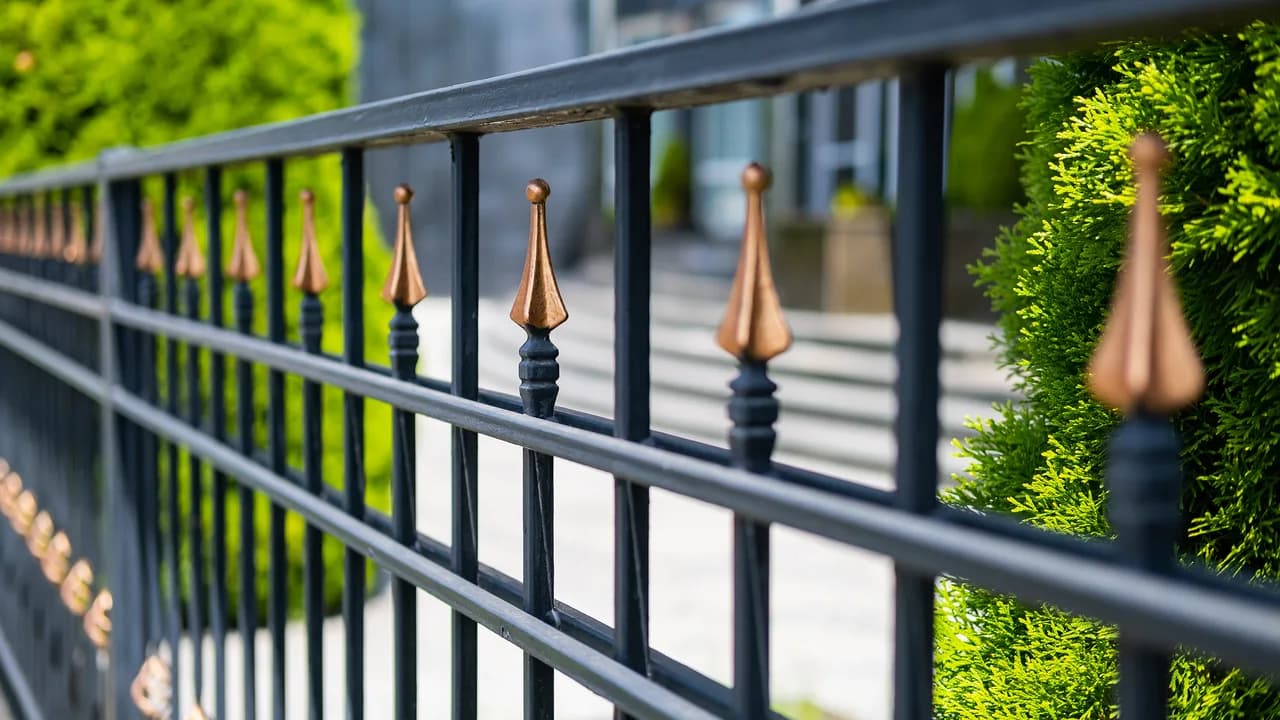
- Welded panels. Iron pickets and rails are welded (not just bolted) into rigid panels, squared to the posts, with consistent picket spacing.
- Gate hangs and hardware. Gates get heavy hinges, latches, and often a drop rod or self-closing hardware — sized so the gate swings true and doesn't sag over time.
- Finish. The steel is galvanized and/or powder-coated so it resists rust. On bare or poorly finished iron, corrosion starts fast around here.
Skip or shortcut any of these and the fence tells on you within a couple of winters.
Why New England makes this a pro job
Three things about our climate turn a straightforward-looking fence into skilled work.
Freeze-thaw and the frost line. When ground water freezes it expands, and the heave lifts anything with a shallow footing. Over repeated winters that force pushes posts up and out of plumb, opens gaps at welds, and racks gates so they stop latching. The fix is footings poured below the frost line so the frozen layer can't grab them — and getting that depth right for your town and soil is judgment a pro brings. A homeowner setting posts in a shallow hole is essentially installing a fence that will move.
Heavy, dead-plumb posts. Iron is heavy, and gate posts in particular carry a swinging load all day. They have to be substantial, anchored deep, and perfectly plumb, or the gate's own weight slowly pulls them over. This is muscle plus precision — hard to get right without the right equipment.
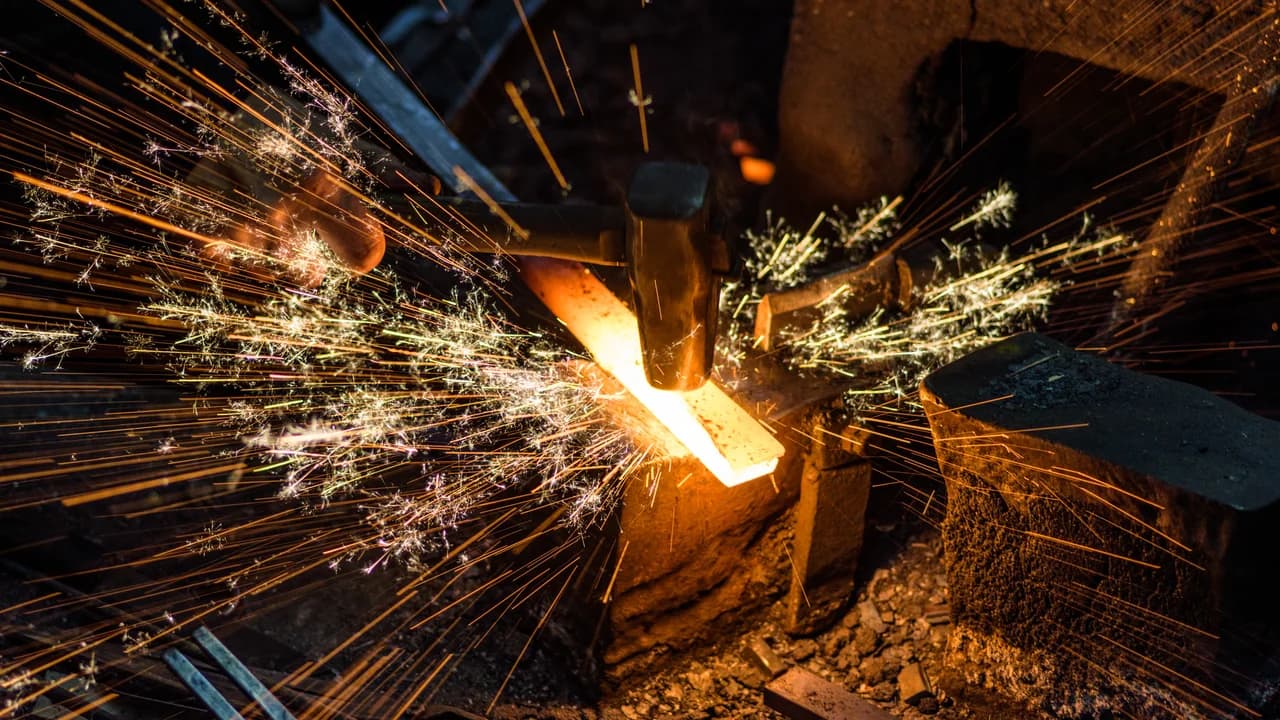
Welded panels. Structural welds have to be clean, full, and square. A bad weld is a future rust point and a weak spot. Welding iron in the field, level and true, is a trade skill, not a DIY afternoon.
Before any post hole gets dug, call Dig Safe at 811. It's free, it's the law in Massachusetts, and it gets underground utilities — gas, electric, water, cable — marked so nobody hits a line. A reputable pro handles this as a matter of course; if a "fence guy" wants to start digging without it, that's a red flag. Ready to skip the guesswork? Get a free estimate and we'll match you with a vetted local pro.
Gate types: pick before you price
Iron gates are where the price range spreads the widest, because "a gate" can mean very different jobs.
- Manual pedestrian gate. A single walk-through gate matched to your fence — the simplest gate, at the lower end of the range.
- Manual driveway gate. A wider single or double-swing gate you open by hand. Heavier, so it needs stronger posts and hinges.
- Automated driveway gate. A swing or slide gate with a motor, safety sensors, and a keypad, remote, or app opener. This is the top of the range because you're adding electrical work, controls, and safety hardware on top of the ironwork.
As a ballpark, manual gates run $800-$2,500 and automated driveway gates run $3,500-$9,000 — your matched pro confirms the number after a measure. Decide early whether you want automation, because it changes the post sizing, the footings, and the wiring the pro plans from day one — retrofitting a motor onto a gate that wasn't built for it is expensive and rarely as clean.
Permits vary by town — check yours
There's no single statewide fence permit. Rules on height, setback from the property line, and whether a permit is required at all are set locally — and they genuinely differ from town to town. A Worcester project and a Boston project can face different requirements, and historic districts or HOAs can add their own. The pro you're matched with knows the local process and pulls permits where they're needed, but it's smart to confirm your own town's fence rules before you finalize a design.
Your local building department has the final say on fences, setbacks, and gates — confirm the requirements for your specific property before anything is fabricated.
Finish and rust: what makes it last
New England is hard on iron. Inland, winter road salt splashes and settles onto fences; near the coast in and around Boston, salt air does the same year-round. On bare or thin-finished steel, rust takes hold fast — first as surface bloom, then as pitting that eats welds and picket bases.
The durability play is straightforward and worth insisting on:
- Galvanizing and/or powder-coat so the steel is sealed against moisture and salt.
- Posts set below the frost line so they don't heave loose and crack the finish.
- Clean welds finished over, since bare weld points are where rust loves to start.
A fence built and finished this way, then rinsed off after heavy road-salt season, holds up for decades. Ask any pro exactly how they'll finish the steel — the answer tells you a lot about whether their fence will still look sharp in ten years.
What it costs in Massachusetts
Every property is different — length of run, terrain, design detail, and gate choices all move the number — so treat these as ballpark ranges the pro confirms after a measure:
- Wrought iron fences: $2,500-$12,000
- Manual iron gates: $800-$2,500
- Automated driveway gates: $3,500-$9,000
Small structural steel repairs (a bracket, a footing fix, a short section) can start around $300 and are site-quoted. Nobody can give you a real, exact price without seeing the site — anyone quoting a firm number over the phone is guessing.
Get matched with a vetted MA fence & gate pro
Fence and gate installation is a real trade job: frost-line footings, heavy plumb posts, structural welds, gate hardware, and — if you want it — automation. It rewards doing it right the first time and punishes cutting corners. That's exactly the kind of work you want a proven local pro on, not a general handyman.
Mass Ironworks matches you with a vetted, independent ironwork pro serving Worcester, Greater Boston, and across Massachusetts. Tell us about your project and get a free, no-pressure estimate — the pro handles the Dig Safe call, the permits, the footings, and the finish.
Get your free estimate and we'll connect you with the right local pro for your fence or gate.
Related: Wrought Iron Fences · Iron Gates
Ready to start your project?
Get an exact price for your ironwork project in under two minutes.
Get my fast estimate