Stair Railing Installation in Massachusetts: What It Really Takes (Iron, Code & Cost)
A real iron stair railing installation in MA runs a measure → fabricate → anchor → inspect cycle, typically a $900–$4,000 ballpark. Here's what the job actually takes — and why it isn't DIY.
Quick answer: A real iron stair railing installation in Massachusetts is a five-step job — measure, fabricate, anchor/weld, code-check, and inspection — not a bolt-on afternoon project. A typical residential run lands in a $900–$4,000 ballpark (your matched pro confirms the real number after an on-site measure), and the finished rail has to hit a 34–38-inch handrail height, a 36-inch guard on open sides, and a baluster spacing tight enough to stop a 4-inch sphere. Here's what actually happens between "I want an iron railing" and a signed-off staircase — and why this is one of the rare home projects that genuinely needs a pro.
First, the disclaimer that matters: building code is enforced by your local building department, and Massachusetts adopts specific editions with its own amendments. Treat the numbers here as the standard baseline and confirm the exact requirements for your project with your city or town's inspector — Worcester and Boston each have the final say — before anything gets fabricated.
What an iron stair railing installation actually involves
People picture a railing as a product you buy and screw down. A custom iron railing is a fabricated build, and the install runs in five stages:
- Measure. The pro takes precise stair measurements — rise, run, total length, landing conditions, and where posts can land on solid structure. Iron doesn't flex to hide a bad measurement, so this step decides whether the finished rail is straight, plumb, and code-height along the whole run.
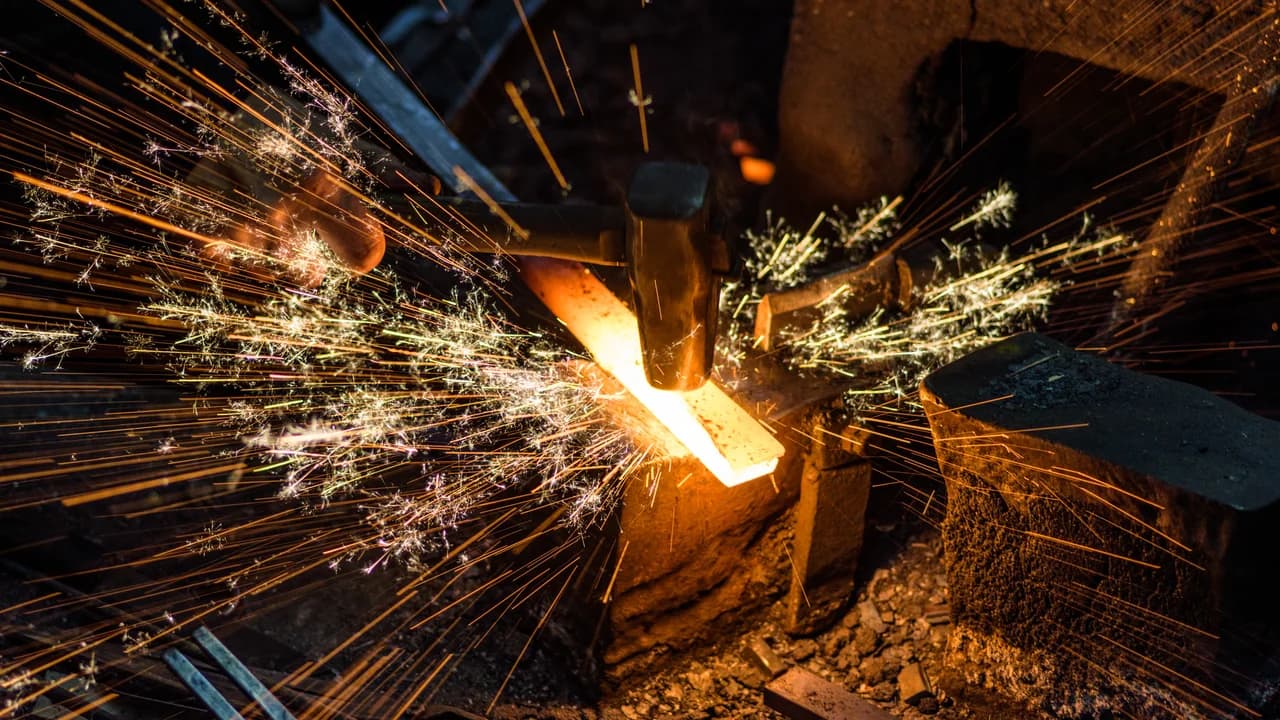
- Fabricate. The rail is cut, welded, and finished to those measurements — in a shop for most custom work. This is where the handrail profile, balusters, and posts become one rigid piece (or a few sections sized to move and install).
- Anchor / weld. On site, the posts get anchored to the structure and the sections are joined. This is the load-bearing heart of the job and, as you'll see below, the step that most often decides pass or fail.
- Code check. The pro confirms the finished heights, graspability, spacing, and post rigidity against 780 CMR (the Massachusetts building code, which follows the IRC for one- and two-family homes) before calling for sign-off.
- Inspection. For new or permitted work, the building inspector verifies it in person. A railing that looks great but misses a number gets red-tagged — and the fix is rework, not touch-up.
Why iron isn't a DIY railing
A wood or big-box aluminum kit is designed for a homeowner. A structural iron railing is not, for four concrete reasons:
- Welding. Custom iron is joined by welds, not brackets. Clean, strong welds — and the finish work to protect them — are a trade skill and a shop's worth of equipment.
- Plumb, heavy posts. Iron posts are heavy and unforgiving. Getting them dead plumb, evenly spaced, and aligned along a stair pitch is deceptively hard, and a lean shows on every baluster.
- Anchoring to structure. A guard has to resist a real person falling into it. That means the posts have to bite into actual framing or slab — not just the surface of a tread — which takes knowing what's under the finish.
- Hitting three code targets at once. The rail has to land in the 34–38-inch handrail window, keep guards at 36 inches (residential; 42 inches for commercial/multi-family), stop a 4-inch sphere, and be graspable — a round profile roughly 1¼–2 inches across, continuous, with the ends returned to a wall or newel. Miss any one and it fails, no matter how good the metalwork looks.
Interior vs. exterior installs
The height and grip rules are the same indoors and out, but the install isn't.
Interior stairs are about clean anchoring into framing, a comfortable graspable rail, and a finish that matches the home. Exterior iron in Massachusetts has to survive New England on top of passing inspection: freeze-thaw heaves and loosens footings and posts over a few winters if they aren't set right, and road salt inland plus coastal salt air around Boston and the shoreline turn surface rust on bare or poorly finished iron into structural rust. So exterior work adds galvanizing or powder-coating and posts set below the frost line (or correctly fastened to structure) as non-negotiables. A rail that clears code on day one but rusts loose in three winters didn't do its job.
Post anchoring: the single thing most likely to fail
If you remember one detail, make it this. On iron railings, how the posts are anchored is the biggest failure point — interior or exterior. There are three common methods, and they are not equal:
- Surface-mounted — a base plate bolted to the top of a tread, slab, or deck. Fast, but only as strong as what's beneath it. Bolted into thin or rotted material, it wobbles, and a wobbly guard fails.
- Core-drilled — the post is set into a drilled pocket in concrete or stone and grouted/anchored in. Much more rigid, ideal for masonry stoops and stairs.
- Welded to structure — the post is welded to a steel stringer or embedded steel. The strongest option where the structure allows it.
An inspector will lean on a finished guard to test it. Loose or under-anchored posts are exactly what gets caught — and it's the part a DIY install almost always gets wrong, because it depends on reading what's actually under the surface.
Not sure your stairs can take a proper anchor — or whether yours is an interior, exterior, or masonry job? That's the first thing the vetted local pro we match you with figures out, before any metal is cut. Get a free estimate.
Permit, inspection, and a realistic timeline
New or replacement railing work is typically permitted work under 780 CMR, which means an inspection at the end. The practical timeline for a custom iron stair railing installation usually looks like: a site measure, then fabrication lead time (the shop builds your rail to spec — this is the longest stretch), then an install day or two, then the inspection sign-off. Straightforward interior runs move faster; ornamental, structural, or exterior masonry work takes longer. The matched pro handles pulling the permit and scheduling the inspector as part of the job — so a failed sign-off is their problem to prevent, not yours to discover.
What it costs
For a typical residential iron stair railing in Massachusetts, most projects land in the $900–$4,000 ballpark — driven by length, interior vs. exterior, the metal and finish, and how the posts have to be anchored. Structural or heavily ornamental work runs higher. Anyone can quote a ballpark; only an on-site measure produces your real number, which the pro you're matched with confirms after seeing the stairs. For a fuller breakdown of what moves the price, see our stair railing cost guide.
DIY vs. hire — the honest take
Here's the straight answer. A decorative interior rail on a short, low run, with no real fall exposure, is the kind of thing a very handy person might attempt — with a wood or pre-made kit, not welded iron. But an iron stair railing that is also a guard — protecting an open side more than 30 inches above the floor below — is load-bearing safety work that has to pass inspection, and it involves welding, plumb heavy posts, structural anchoring, and hitting several code numbers at once. That's not a stubbornness thing; it's a "someone leans on this rail" thing. For iron, hire it out.
Get it installed right the first time
You don't have to source a welder, learn 780 CMR, and gamble on the inspection. Tell us about your stairs and we'll match you with a vetted local Massachusetts ironwork pro — one who measures, fabricates to spec, anchors the posts to survive New England, and carries it through inspection. It's a free estimate and a real on-site measure, whether you're in Worcester, Greater Boston, or the towns in between. Browse stair railing styles and options on our iron stair railings page, then book.
Get your free stair-railing estimate →
Related: Stair railing height & code rules · Iron railings for your home
Ready to start your project?
Get an exact price for your ironwork project in under two minutes.
Get my fast estimate