Iron Stair Railing Ideas for MA Homes: Modern, Classic & Code-Smart Designs
The best iron stair railing ideas for MA homes — modern minimalist, classic scroll, industrial flat-bar, farmhouse and iron+glass — built code-smart to survive New England.
Quick answer: The best iron stair railing ideas for a Massachusetts home come down to a handful of directions — modern minimalist (thin, matte-black bars), classic wrought-iron scroll, industrial flat-bar, farmhouse (iron balusters with a warm wood top rail), and iron + glass or cable for an open, airy look. Any of them can be built to Massachusetts code and finished to survive New England winters; the real trick is matching the style to your home and your conditions. Below are the ideas worth considering, and how to choose one that actually fits.
Searching for stair railing ideas usually starts the same way: a photo you saved, a staircase that looks nothing like yours, and no real sense of what it costs or whether it's even legal in Massachusetts. Here's the good news — iron is the most flexible material for the job. It bends into Victorian scrollwork or reads as a single clean line of matte black, and either way it can be built to code and finished to survive a New England winter.
Modern minimalist iron — the clean-line favorite
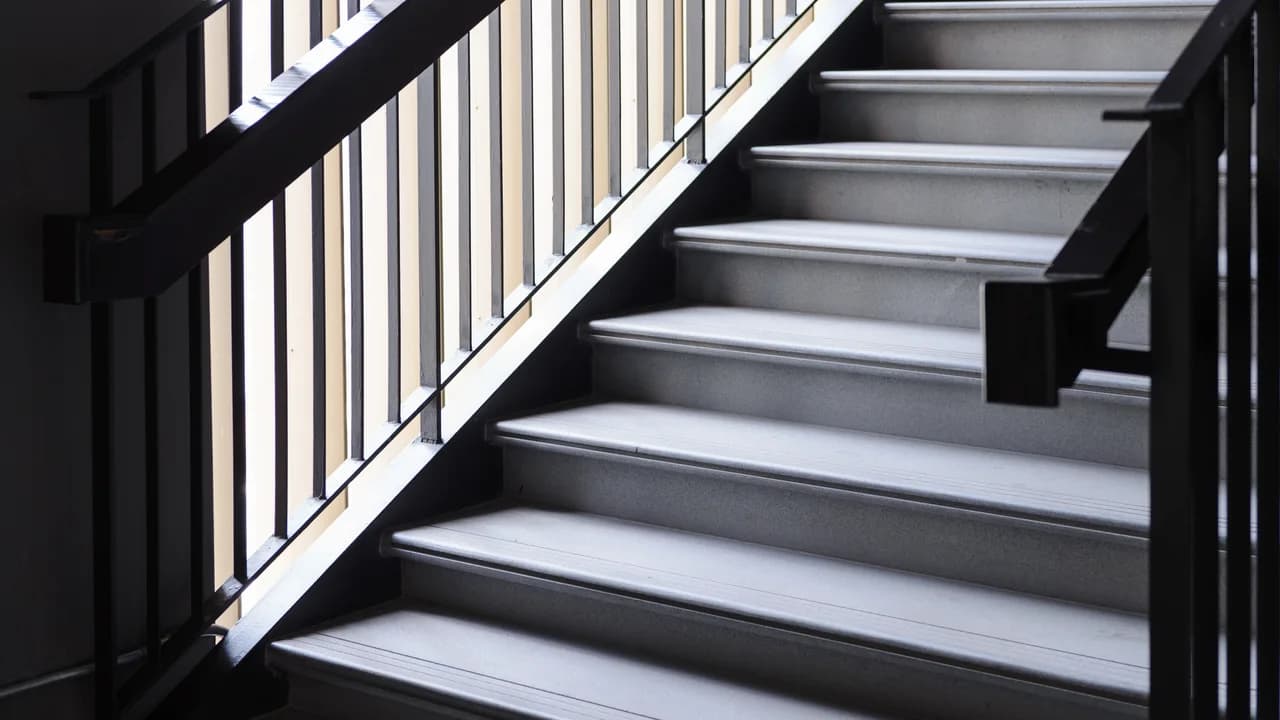
One of the most popular looks right now is the modern stair railing: thin vertical pickets or a few crisp horizontal bars, a slim top rail, and a matte-black finish with zero ornamentation. It's the "less is more" approach, and it's flattering in renovated Boston condos, open-concept new builds, and any home leaning contemporary. Because the profile is so slim, the metal does the styling for you — no wood cap, no scrollwork, just line and shadow. It also reads well against light oak treads or a pale wall, which is why it pairs so naturally with open-riser staircases.
Classic wrought-iron scroll
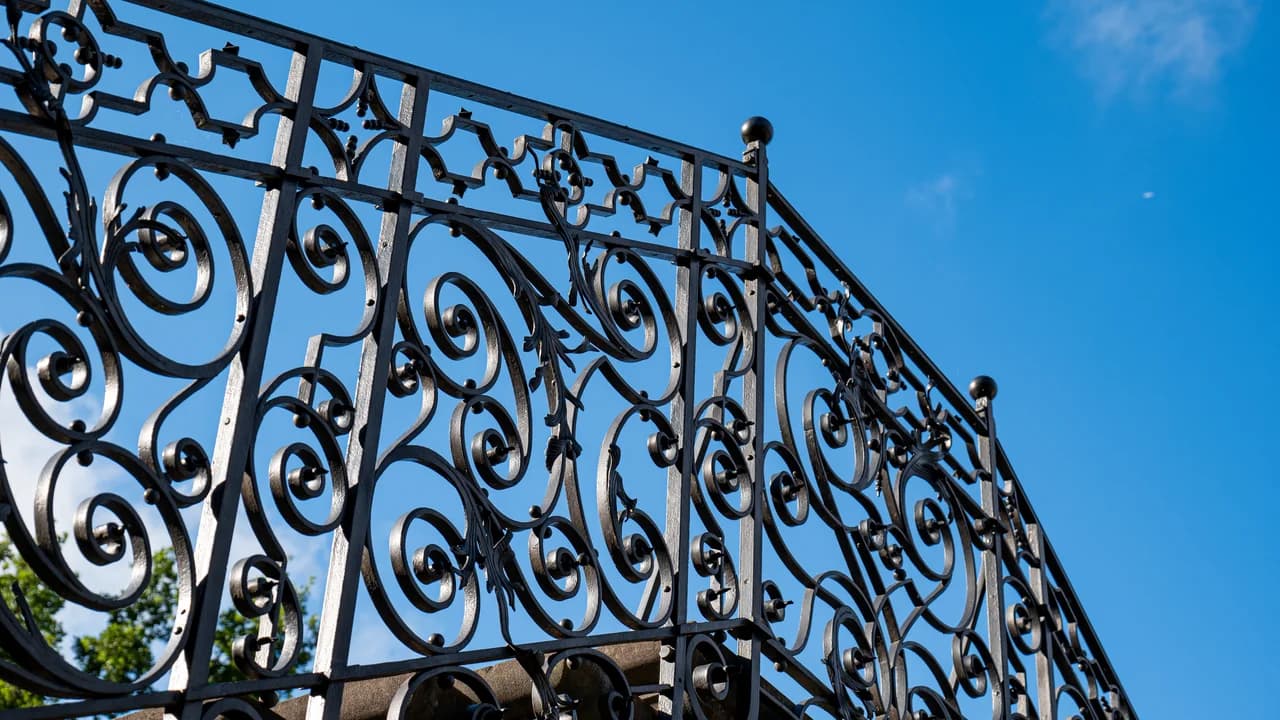
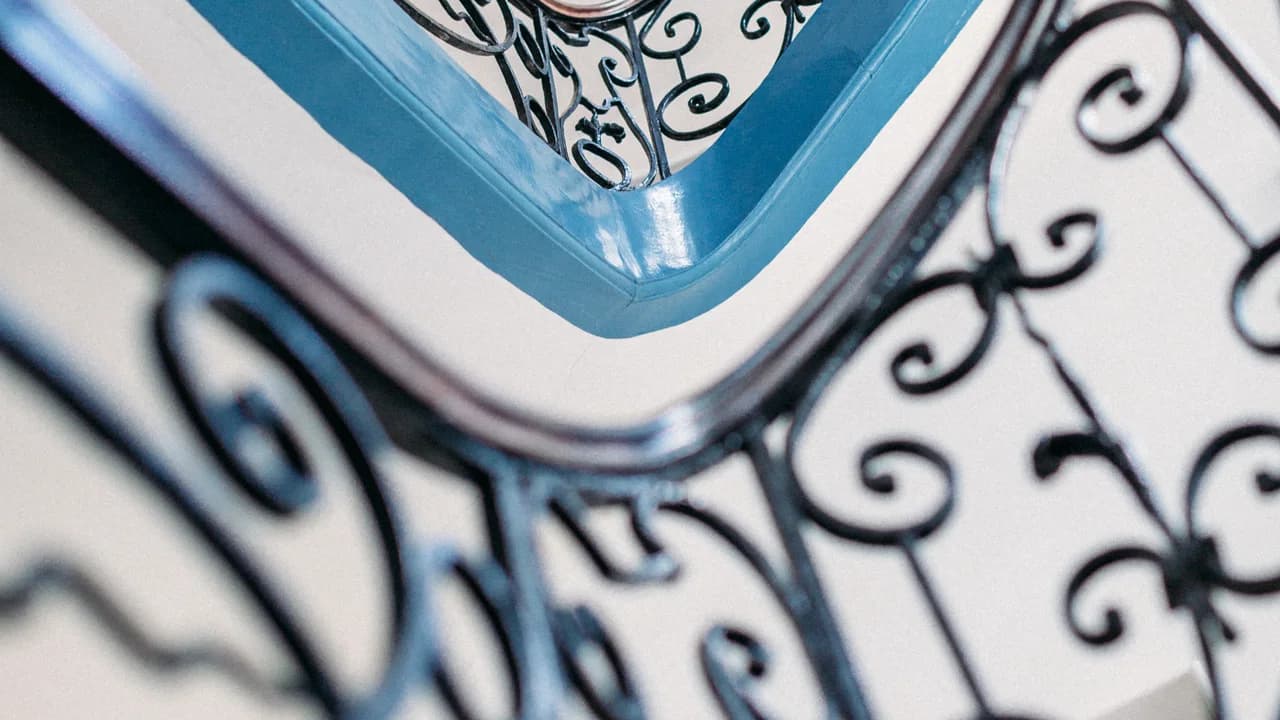
If your home has history, the classic route is hard to beat. Ornate S- and C-scrolls, basket twists, and forged collars are the details that make a Colonial, Victorian, or Boston brownstone feel finished rather than flipped. You can go full period-authentic or dial it back to a single repeating scroll motif that nods to the era without overwhelming a narrow staircase. This is genuine ornamental ironwork, and it's exactly the kind of custom iron stair railings that a skilled local fabricator produces one section at a time.
Industrial and flat-bar
Flat-bar stock — welded into a tight grid or a horizontal ladder pattern — gives you that reclaimed-warehouse feel without the price of true salvage. Left raw and clear-coated or blackened for depth, it suits exposed-brick lofts, garden-level units, and any space where the architecture is already a little rugged. Flat bar also handles longer unsupported runs gracefully, which helps on straight, steep staircases.
Farmhouse and transitional
Not every home wants to commit to one extreme. Farmhouse pairs simple square iron balusters with a warm wood top rail — the iron keeps it grounded, the wood keeps it inviting. Transitional splits the difference more evenly: clean iron verticals with one subtle detail, like a single decorative baluster or a gently curved volute at the bottom step. Both are safe, resale-friendly choices when you're not sure how bold to go.
Mixed materials: iron + glass or iron + cable
For the most open, light-filled result, combine an iron frame with tempered-glass panels — the structure stays iron, but sightlines open all the way through. Iron posts with horizontal cable infill deliver a similar airy effect at a lower cost and read modern in almost any room. One honest caveat: these are exactly the designs where Massachusetts code gets particular, because the infill spacing on glass gaps, cable runs, and wide-set balusters all has to pass the same test (more on that below).
Ornamental statement railings
If the staircase is the centerpiece of the home — a sweeping curve in an entry foyer, a two-story open stairwell — a custom ornamental railing earns its keep. Botanical motifs, forged leaves and vines, a discreet family monogram, or a flowing rail that follows a curved stringer all fall here. These are fully bespoke, so they benefit most from an in-person look at the space before anyone talks design.
Not sure which direction fits? Get matched with a vetted local pro for a free on-site estimate — they'll look at your staircase, talk through the styles above, and confirm what actually works in your space.
Interior vs. exterior: pick for the conditions
Indoors, you have room to be delicate — fine scrollwork, thinner stock, and finishes chosen purely for looks all hold up beautifully because they're never touched by weather.
Outdoors is a different game, and this is where New England punishes shortcuts. Freeze-thaw cycles heave and loosen footings and posts, road salt inland and coastal salt air near the shoreline rust bare or poorly finished iron, and a railing that looked perfect in July can bleed rust by April. The durable move for any exterior stair is galvanizing or powder-coat over the steel, with posts set below the frost line or fastened directly to structure. If you're weighing an outdoor front-stoop railing in Worcester or a stoop and areaway in Boston, lead with the finish decision, not just the shape.
Finishes and colors that last
Matte black remains the runaway favorite — it flatters nearly every style and hides everyday wear. Oil-rubbed bronze adds warmth for traditional and transitional homes, and a custom powder-coat can put the railing in almost any color you want, from soft white to deep bronze-green. For anything exterior, powder-coat over galvanized steel is the combination that survives our winters; for interior iron railings, you have far more freedom to choose a finish for looks alone. Whatever the color, ask that welds be ground smooth and the finish applied evenly — that's the difference between a railing that looks custom and one that looks bolted together.
How to match your home's style
A quick shorthand for narrowing the field:
- Colonial, Victorian, brownstone → wrought-iron scroll or restrained ornamental
- Modern, contemporary, condo/loft → minimalist iron or flat-bar
- Farmhouse, craftsman → iron balusters with a wood top rail
- In-between or resale-minded → transitional, or iron + glass for openness
Then let the house cast the deciding vote: echo the front-door hardware, any existing exterior metalwork, or a fixture you already love. Matching one detail you already own is what makes a new railing look like it was always there.
Looks great, passes code, and survives New England
The honest bridge between a saved photo and a finished staircase is code. In Massachusetts, new and replacement stair railings follow 780 CMR (the building code, which follows the IRC for one- and two-family homes): a graspable handrail 34 to 38 inches above the nosing on any stair with four or more risers, a guard at least 36 inches for homes (42 inches for commercial and multi-family), and infill tight enough that a 4-inch sphere can't pass through. The handrail itself should be round, roughly 1.25 to 2 inches, continuous, with returns back to the wall or newel. Those grip, continuity, return, and post-anchoring details are the usual reasons a railing fails inspection — and the wide-open cable, glass, and scroll designs are exactly where the 4-inch rule tends to bite.
One Massachusetts wrinkle worth knowing: an existing railing may be perfectly legal under the older State Sanitary Code (105 CMR 410), but the moment you build new or replace it, it has to meet the tougher 780 CMR numbers above.
Your local building department — Worcester and Boston each run their own — has the final say. Always confirm the numbers with your inspector before anyone fabricates. For the full breakdown, see our guide to stair railing height and MA code.
The point isn't to talk you out of the bold idea. It's that the right pro designs the look and the code compliance together, so you never have to choose between the two.
Turn an idea into a real railing
Mass Ironworks doesn't fabricate, weld, or install anything ourselves — we're the connector. Tell us what you're picturing and we match you with a vetted, independent local ironwork pro who builds it to MA code and finishes it to last through New England winters. Iron stair railings typically run in the $900–$4,000 ballpark depending on length, design, and finish; the pro we match you with confirms the exact price after an on-site measure. When you're ready to move from inspiration to a real quote, get your free estimate and see what a custom railing would take for your staircase. Curious what the process looks like start to finish? Our iron stair railing installation guide walks through every step.
Get your free stair-railing estimate →
Related: Iron Stair Railings in MA · Stair Railing Height & Code
Ready to start your project?
Get an exact price for your ironwork project in under two minutes.
Get my fast estimate