Porch Railing Ideas That Hold Up to New England Weather (Modern, Classic & Budget)
The best porch railing ideas for New England homes — wrought iron, aluminum, classic and modern styles that survive freeze-thaw and salt, plus what a code-height railing costs in MA.
Quick answer: The porch railing ideas that actually last in New England come down to four looks — classic wrought-iron scrollwork, clean modern verticals, a transitional picket with one detail, or budget-friendly aluminum. The style is your call; what makes or breaks the railing here is the finish and how the posts are anchored against freeze-thaw and salt. Below is how to choose, plus what a code-height porch railing typically costs in Massachusetts.
Your porch railing is the first thing anyone sees — and the first thing a New England winter goes after. The right porch railing ideas don't just look good in June; they shrug off freeze-thaw, road salt, and coastal air so the railing still looks sharp winters later. Below are the styles that actually hold up here, how to pick one for your house, and what it costs to do it right.
Front-porch railing ideas, by style
Most porch railings in Massachusetts fall into a few families. Here's how they read and how they wear.
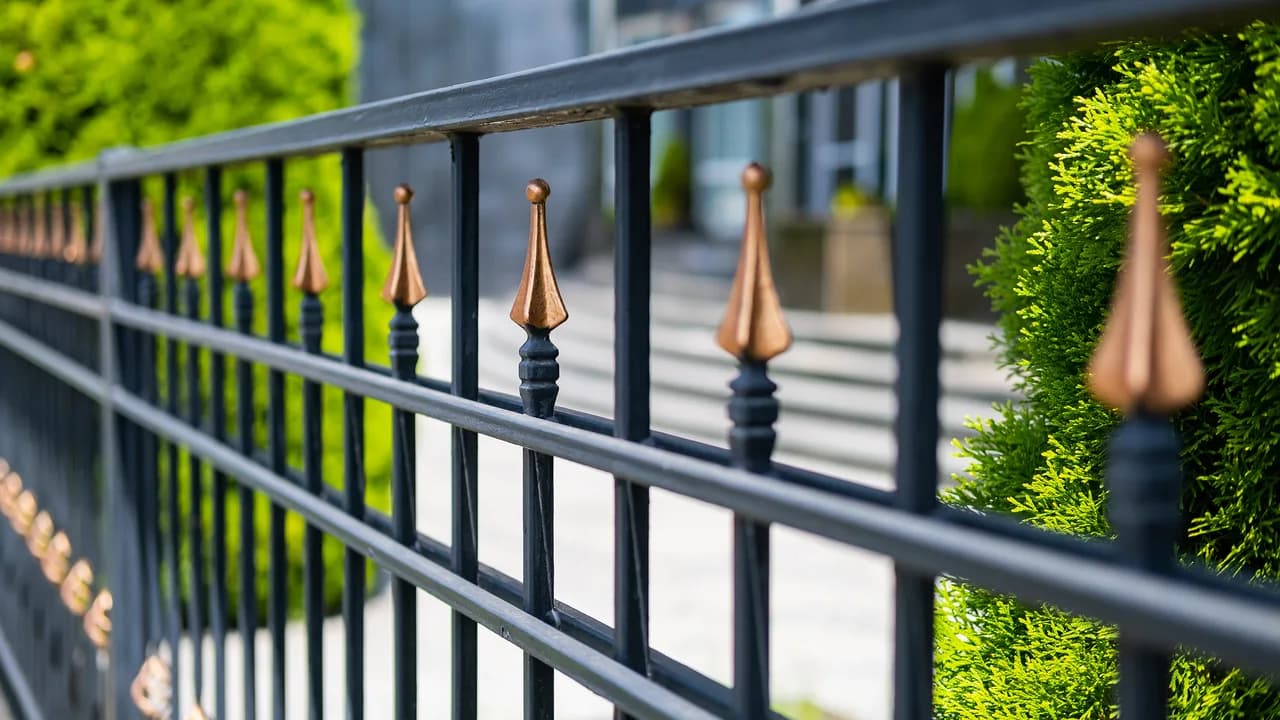
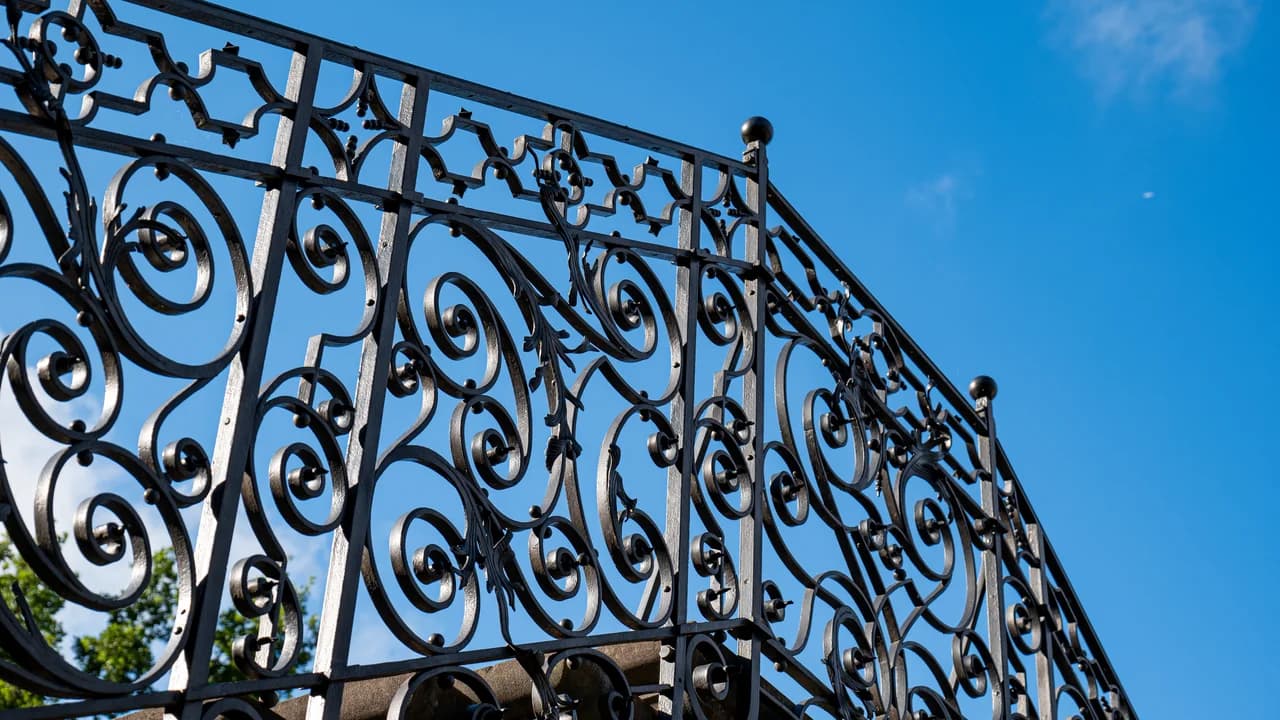
Classic wrought iron. Scrollwork, spear tops, a graceful bottom rail — this is the look people picture for a Colonial, a Victorian, or a brick front stoop. Real iron is heavy, timeless, and repairable: a good pro can re-weld or re-finish it decades later instead of replacing the whole run. The catch is finish. Bare or thinly painted iron rusts fast in our climate, so the finish is the whole game (more on that below).
Modern and minimalist. Thin square balusters, a clean horizontal top rail, matte black powder coat, and lots of negative space. Modern front-porch railing designs lean on simple geometry instead of ornament, which suits newer builds, farmhouse remodels, and anyone who wants the view — not the railing — to be the star. Horizontal "cable-look" iron and slim vertical pickets both live here.
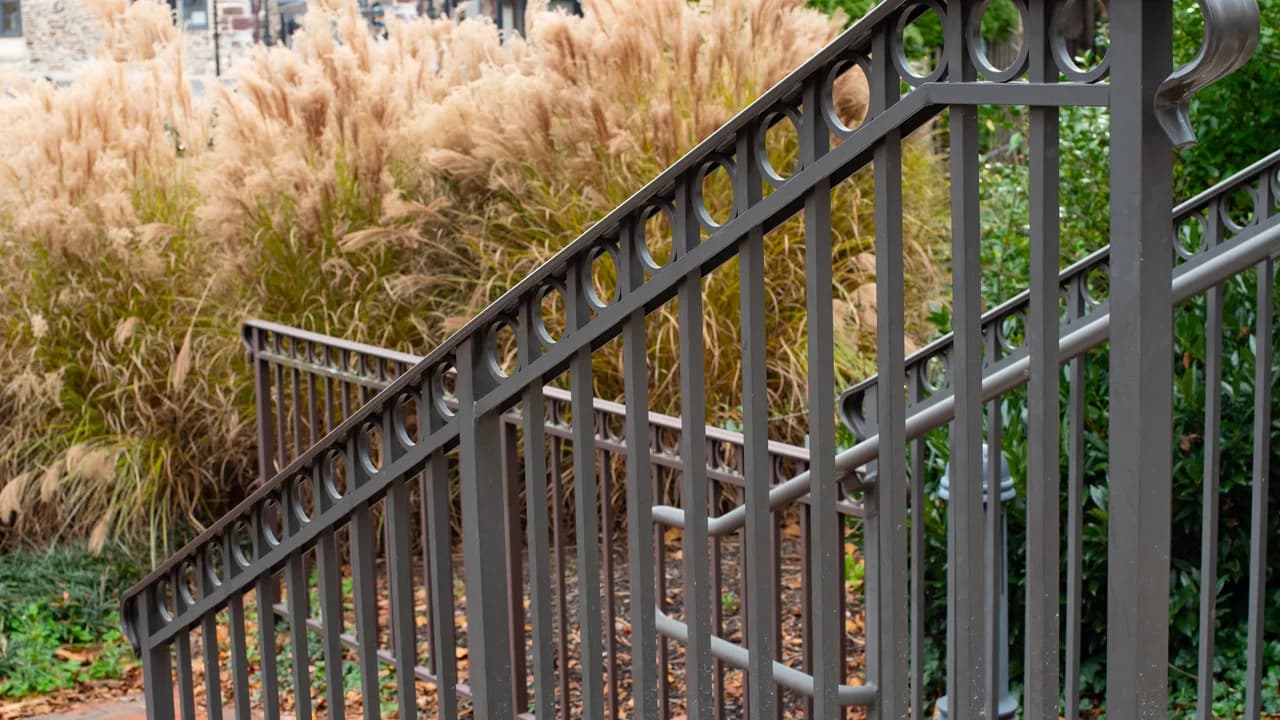
Transitional. Straight iron pickets with one small detail — a subtle basket twist, a knuckle, a decorative post cap. It's the crowd-pleaser: dressy enough for an older home, clean enough for a new one.
Aluminum. Lighter, rust-proof by nature, and usually the budget-friendly pick. Powder-coated aluminum mimics the black-iron look at a lower price and lower weight, which matters on wood porches. It won't have the heft or the repairability of true iron, but for many front porches it's a smart call. We break down the trade-offs in our aluminum vs. iron porch railing guide.
Modern front-porch railing ideas that still respect the house
The mistake with modern railings is going so minimal the porch fights the architecture. A few combinations that work in New England:
- Matte-black iron + white posts. Powder-coated black infill between white-wrapped structural posts reads crisp against clapboard and never looks trendy-for-its-own-sake.
- Slim verticals, wide spacing (within code). Thin pickets spaced to the maximum the code allows keep sightlines open while still passing inspection.
- Iron rail, wood cap. An iron frame with a wood or composite top rail gives you a warm handhold and a modern-industrial base.
- Low-profile top rail. A flat bar instead of a rounded cap makes the whole railing disappear visually — great when you want the porch to feel like an outdoor room.
The unifying idea: let the iron do the structure, and keep the ornament to one deliberate move.
How to choose a porch railing for your home
Four quick filters:
- Match the era, don't fight it. Victorian and Colonial homes carry ornament well; mid-century and new construction usually want clean lines. When in doubt, transitional splits the difference.
- Weigh your porch. Heavy cast iron on an older wood porch may need the framing checked. Aluminum or lighter fabricated iron can be the better structural fit.
- Look at your neighbors' rust. Coastal Boston and shoreline towns punish finishes harder than inland Worcester. If nearby railings are streaking orange, prioritize galvanizing and powder coat over paint.
- Decide handrail vs. guard early. If your porch is raised, you may legally need a taller, code-compliant guard — not just a decorative rail (see below). That changes the design from the start.
The vetted local pro we match you with measures the porch, checks post anchoring, and specs the finish and the code path before anything gets fabricated.
The durability angle: what New England does to a railing
This is where good porch railing ideas separate from Pinterest porch railing ideas. Our climate is unusually hard on exterior iron:
- Freeze-thaw heaves and loosens footings and posts. A railing anchored to a shallow or crumbling base will wobble within a season or two.
- Road salt (inland, Worcester and the metro-west towns) and coastal salt air (Boston and the shoreline) attack any spot where the finish is thin, chipped, or scratched.
- Standing water at post bases wicks up into hollow sections and rusts iron from the inside out.
The durability play is boring and it works: hot-dip galvanizing under a powder-coat finish, posts anchored below the frost line or fastened firmly to structure, and drainage so water can't pool at the base. Painted-only iron is the one that fails first here. Get the finish right and an iron porch railing outlasts almost every other option on the front of the house — one reason it's worth talking to a real iron railing pro rather than grabbing a big-box kit.
Cheap porch railing ideas (and where not to cut)
Budget-friendly doesn't have to mean short-lived. If you're keeping costs down:
- Go aluminum. Powder-coated aluminum gets you the black-metal look, rust resistance, and a lower price — the single best value move for most front porches.
- Simplify the pattern. Straight pickets cost less than scrollwork and often look more modern anyway.
- Keep runs short and standard. Fewer corners, gates, and custom curves means less fabrication time.
- Refinish, don't replace. If your existing iron is structurally sound but ugly, a strip-and-powder-coat can be a fraction of a full replacement.
Where not to save: the finish and the anchoring. A cheap paint job or an under-set post is the thing that fails in a New England winter and costs you twice.
Don't forget the 36-inch guard rule if your porch is elevated
Looks aside, a raised porch is a safety code issue. Under the Massachusetts building code (780 CMR, which follows the IRC for one- and two-family homes) for new or permitted work:
- A guard is required wherever the open side of the porch sits more than 30 inches above the ground below.
- That guard must be at least 36 inches tall for a residential home (42 inches for commercial or multi-family).
- The infill can't allow a 4-inch sphere to pass through — so those wide-spaced modern pickets still have a hard limit.
If your porch also has steps, the handrail rules are different (34–38 inches above the nosing, with returns and a graspable profile) — we cover those in the stair railing guide and in our deck railing height and code guide.
Codes have nuances — existing grandfathered railings fall under different, more lenient rules than new work. Your local building department (Worcester and Boston each have the final say) confirms what your specific porch needs, so check with them before anything gets fabricated.
What a porch railing costs in Massachusetts
These are typical MA ballpark ranges from the business — your matched pro confirms the exact number after an on-site measure. Never treat them as a fixed price:
- Iron railings (general): $700–$3,500
- Iron stair railings (if your porch has steps): $900–$4,000
Where you land depends on length, height, pattern complexity, the finish, and whether posts need new footings. A simple straight run of powder-coated pickets sits near the low end; ornate scrollwork with gates and custom curves climbs toward the top.
Get a porch railing spec'd for New England
The prettiest porch railing idea only pays off if it survives the winters. Mass Ironworks isn't a fabricator — we're the connector that matches you with a vetted, independent local ironwork pro who measures your porch, recommends the finish that fits your exposure (inland salt vs. coastal air), and handles the 780 CMR code path so your railing passes inspection and lasts.
Whether you're in Worcester, Boston, or anywhere across our expanding MA service area, tell us what you're picturing and we'll match you with the right pro.
Get your free porch railing estimate → No obligation — just an on-site measure and an honest quote from a local pro who knows what New England winters do to a railing.
Related: Iron Railings for MA Homes · Deck Railing Height & Code in Massachusetts
Ready to start your project?
Get an exact price for your ironwork project in under two minutes.
Get my fast estimate