Ornamental iron
Ornamental ironwork for commercial and institutional properties — decorative railings, entry features, gates, grilles, and custom metal accents fabricated to spec and installed by our crew. We work with architects, designers, and general contractors on projects where the ironwork is part of the building's character.
Call our team today.
What's included
- Custom ornamental design and fabrication
- Decorative railings, balusters, and newel posts
- Entry features, archways, and gates
- Window grilles and security bars
- Custom wall brackets, signs, and accents
- Powder-coat or paint finish in custom colors
How we quote it
- Design drawings or reference images
- Linear footage and panel count
- Complexity of pattern and finish
- Installation access and building type
- Lead time for custom fabrication
We quote on project scope, material, and complexity — not a flat rate. You get one written quote from us.
Ballpark prices
Ballpark 2026 Massachusetts prices, for planning only. Your exact price comes in a written quote after we review the drawings or the site.
Request an estimateAbout ornamental iron
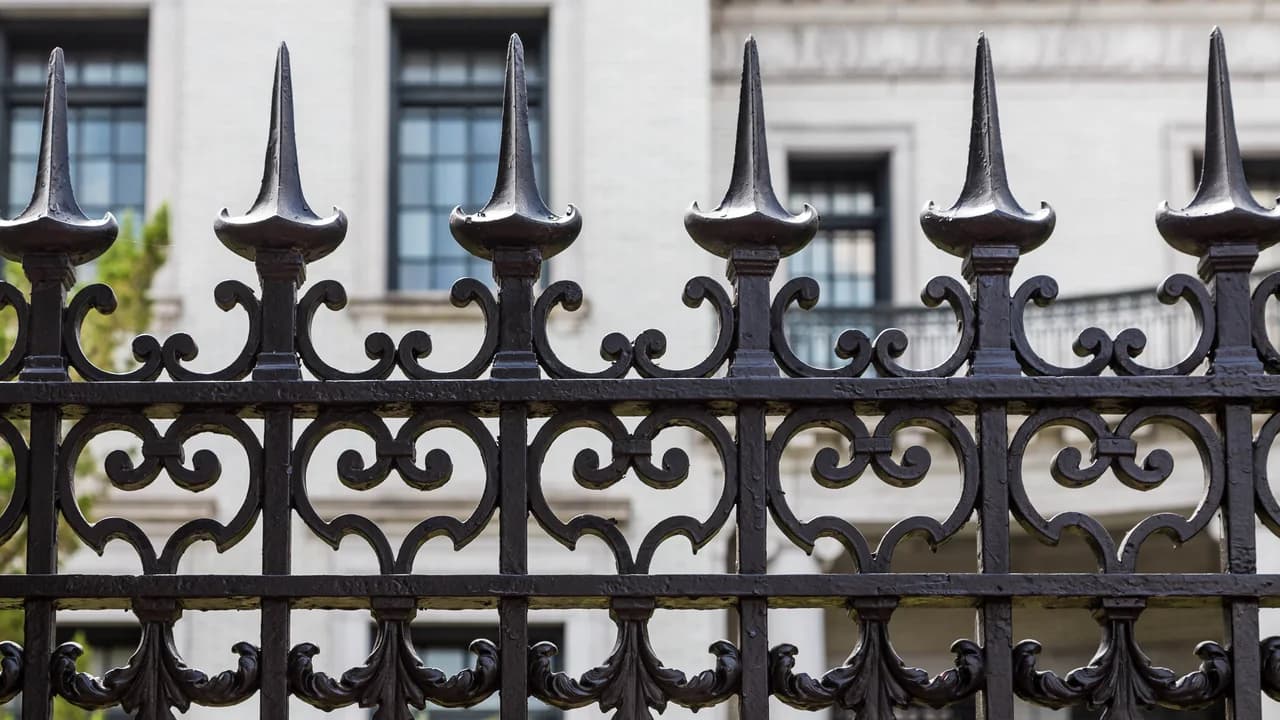
Commercial ornamental ironwork is the metalwork people see and touch: stair and balcony railings in lobbies and atriums, exterior guards and handrails at entries, decorative fences and gates around campuses and courtyards, window grilles, canopies, and custom features like sign brackets and screens. It shows up on churches, schools, restaurants, multi-family buildings, and historic storefronts as often as on new construction.
These projects usually start from an architect's or designer's drawings, or from an existing piece that needs to be replicated. Our crew develops shop drawings showing dimensions, profiles, and connections, submits them for approval, and may produce a sample of a finish or detail before full fabrication. Installation is coordinated with the general contractor so embeds, railings, and finishes land in the right sequence.
On historic buildings, matching existing work is often the job itself. We can replicate cast or forged details, repair original pieces, and refinish them, which local historic commissions often prefer to full replacement.
How the project works
Send drawings or photos
Share the architect's drawings, reference images, or photos of existing work to match. We review it and set up a site visit.
Review and quote
Our team reviews drawings or existing conditions, clarifies finish and performance requirements, and quotes fabrication and installation.
Shop drawings and samples
Shop drawings, and finish or detail samples where needed, go to the architect or owner for approval.
Fabrication and finish
Pieces are cut, forged, welded, and finished to the approved drawings, then staged for delivery.
Install and closeout
Railings, gates, and features are installed in coordination with other trades, then checked against the drawings and any inspection requirements.
Materials and finishes
Mild steel
The standard for most ornamental railings, grilles, and gates. It is easy to forge, bend, and weld, and it needs galvanizing, powder coat, or both outdoors.
Stainless steel
Common for modern handrails and high-touch areas. It doesn't need a coating, costs more, and shows the quality of the fabrication in every weld and joint.
Cast iron and cast aluminum components
Used for period details like finials, rosettes, and balusters. Cast iron matches historic work; cast aluminum is lighter and won't rust but looks slightly different up close.
Powder coat over galvanizing
The durable exterior finish, available in standard and custom colors. For interior work, powder coat or a paint system is typical.
Massachusetts code and permits
Commercial railings and guards in Massachusetts fall under 780 CMR, the state building code, which is based on the IBC for buildings other than one- and two-family homes. Guards are typically required at 42 inches where a walking surface is more than 30 inches above the floor or grade below, handrails run 34 to 38 inches above stair nosings, and guard openings generally must stop a 4-inch sphere, which limits how open an ornamental pattern can be. Public and commercial buildings are also subject to the state's accessibility regulations (521 CMR), which add handrail requirements such as extensions at stairs and ramps, and buildings in local historic districts may need commission approval for exterior changes. Your local building department has the final say.
What affects the price
- Design complexity and the amount of hand forging or custom detail
- Linear footage, number of panels, and repetition
- Material: mild steel, stainless, or cast components
- Finish: galvanizing, powder coat, or custom colors
- Shop drawing, sample, and submittal requirements
- Installation access, embeds, and coordination with other trades
- Historic matching or restoration of existing pieces
Frequently asked questions
- Can you work from architect drawings?
- Yes — we fabricate to drawings and shop drawings, and can provide submittals for approval if required by the project.
- Do you do custom ornamental designs?
- Yes — we fabricate custom work, so our team can work from a reference, adapt a traditional pattern, or design something original for your property.
- What finishes are available?
- Powder-coat finishes are available in any RAL or custom color, as well as traditional paint. Powder-coat is more durable for exterior applications.
- Do you work with historic buildings?
- Yes — we have experience matching period-appropriate ironwork styles for historic properties and can work within historic preservation guidelines.
- How high do commercial railings need to be in Massachusetts?
- Guards on commercial buildings are typically required to be at least 42 inches high where the drop is more than 30 inches, with handrails at 34 to 38 inches above the stair nosing. Guard openings generally must stop a 4-inch sphere. Our team confirms the requirements with the architect and the building department.
- Can ornamental railings meet code and still look decorative?
- Yes. Scrollwork, panels, and custom patterns can be designed within the height and opening limits; the pattern has to stop a 4-inch sphere and the posts have to carry the required loads. The shop drawings are where the design and the code get reconciled.
- Can historic iron railings be repaired instead of replaced?
- Often, yes. Original railings and fences can usually be blasted, repaired, and refinished, with missing pieces replicated to match. Whether repair makes sense depends on how much of the original metal is sound, which our team assesses on site.
- Do commercial handrails have to meet accessibility rules in Massachusetts?
- Yes. Handrails in public and commercial buildings are subject to the Massachusetts accessibility regulations (521 CMR) as well as the federal ADA standards, which cover handrail height, graspable profile, and extensions at stairs and ramps. The architect usually specifies the details, and our crew fabricates to them.