Iron Railings in Boston's Historic Districts: Commission Rules, Approvals & Permits
Replacing or repairing an iron railing or fence in Back Bay, Beacon Hill, the South End or another Boston historic district? Here's which commission reviews it, what its guidelines expect, and how approval fits with your building permit.
Quick answer: If your home is in one of Boston's local historic districts (Back Bay, Beacon Hill, the South End, Bay Village and several others), you generally need the district commission's approval before you repair or replace an iron railing, fence or balcony that can be seen from a public way. The guidelines all point the same direction: keep original ironwork wherever you can, and when it truly can't be saved, replace it in iron that matches the original. Approval comes first; the Inspectional Services Department won't issue the building permit without it.
One caveat up front: this guide summarizes each commission's published guidelines and the Boston Landmarks Commission's application instructions. Guidelines get revised and every application is judged on its own merits. Confirm your project with commission staff and with your building department (Boston's Inspectional Services Department) before anything gets fabricated.
Which commission covers your street
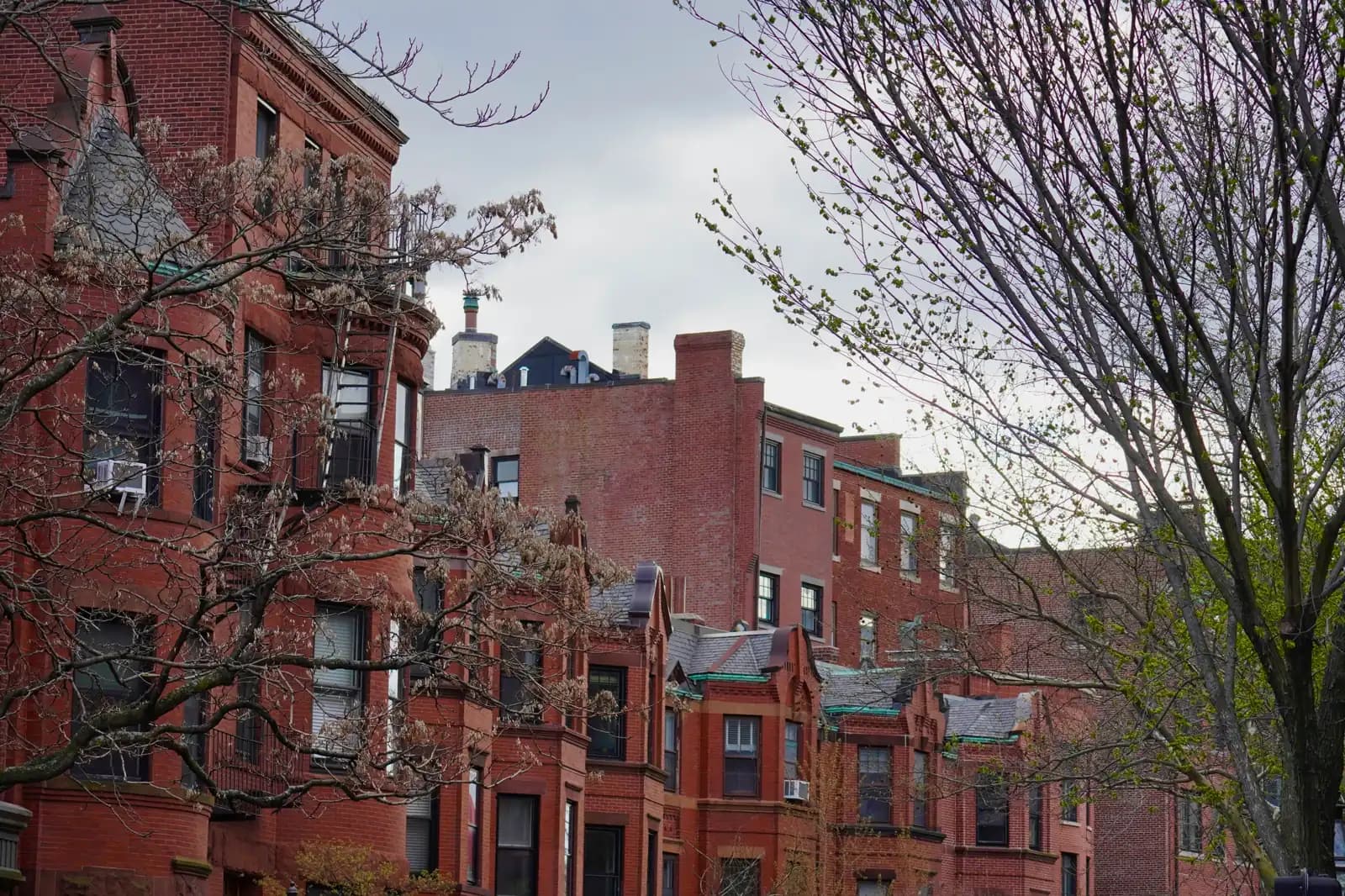
Boston's historic districts are reviewed by district commissions staffed through the Boston Landmarks Commission, which sits in the City's Office of Historic Preservation. The City lists ten local districts:
- Back Bay Architectural District: reviewed by the Back Bay Architectural Commission (BBAC), created by Chapter 625 of the Acts of 1966.
- Historic Beacon Hill District: reviewed by the Beacon Hill Architectural Commission (BHAC), created by Chapter 616 of the Acts of 1955. It's the oldest historic district in Massachusetts.
- South End Landmark District: designated in 1983 and reviewed by the South End Landmark District Commission.
- Bay Village Historic District and Fort Point Channel Landmark District, each with its own commission.
- Five architectural conservation districts: Aberdeen, Bay State Road/Back Bay West, Highland Park, Mission Hill Triangle, and St. Botolph Area.
Not sure whether your address is inside a boundary? The City publishes district maps and a landmarks map, and commission staff can confirm it. Check before you plan anything, because the rules below only apply inside the lines.
What the commissions actually review
The details differ by district, but the trigger is the same idea: exterior work you can see.
- Beacon Hill: the BHAC reviews changes to any exterior architectural feature "open to view from a public way," and no such work can start without a Certificate of Appropriateness. The guidelines point out that the public way doesn't have to be inside the district: views from Boston Common, Storrow Drive or the Longfellow Bridge count. Work done without a certificate is subject to fines of up to $1,000 per day.
- Back Bay: the enabling act lets the BBAC review all exterior changes in the district, and the City's district page says approval is required before beginning any exterior work.
- South End: the Standards and Criteria limit review to facades that face streets (including the front yard) and roof areas visible from public streets. Rear and side walls that don't face a public street aren't reviewed. Inside that scope, all exterior alterations need approval unless they appear on the district's specific exemption list. Railings and fences aren't on it.
Both the Back Bay and South End documents define "maintenance and repair" narrowly: work that involves no change in materials, dimensions, design, configuration, color, texture or visual appearance. Swapping a cast-iron baluster for a plain steel picket is not maintenance under that definition. It's an alteration.
What the guidelines expect from ironwork
This is where the districts are most alike. Here is what each one's written guidance says about railings and fences:
Beacon Hill. The BHAC guidelines say original or early architectural ironwork "shall be retained unless demonstrated to be beyond repair," and if it is, it "shall be duplicated in the same material and style." New iron features have to be compatible with the style of the property. The general guidelines add that replacement materials must match the originals in composition, design, color, texture and other visible qualities.
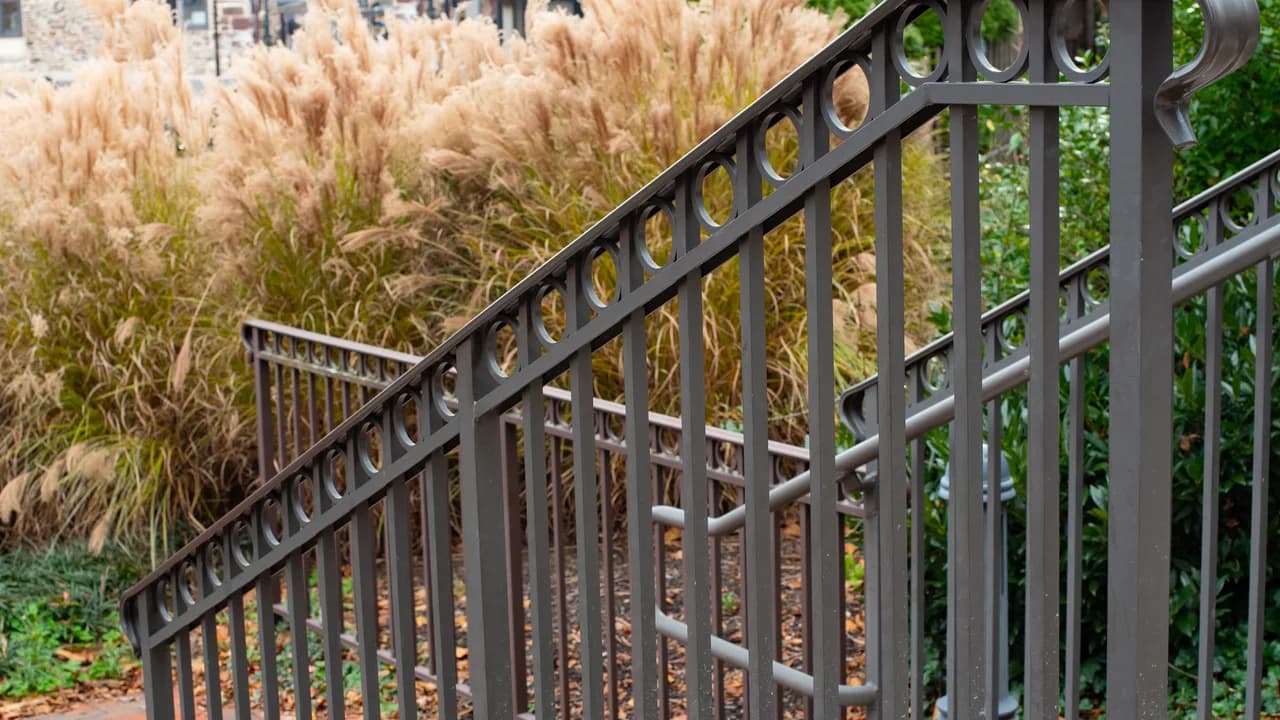
Back Bay. The BBAC residential guidelines say all new or replacement ironwork should be compatible with the building in style, scale, weight and detailing, and painted black or an appropriate dark color. Original yard fencing "shall be maintained and repaired." On railings, restoration of original iron or stone handrails is encouraged, new handrails must follow historic precedent and attach at the side of the front steps, and aluminum and other industrial materials are not appropriate.
South End. The Standards and Criteria say existing cast iron stair railings, balustrades and decorative balconies "shall be retained." If they're badly deteriorated or missing, replacements must match the size and massiveness of the remaining original elements, or of surviving ironwork on nearby buildings. Simplified adaptations may be allowed if they meet those criteria, and all iron work should be black. Original front-yard fences should be maintained and repaired. If a fence is gone, a copy is preferred, though an appropriate contemporary design may be acceptable. Light-gauge metal, chain link and wooden picket fences are listed as inappropriate for front yards.
Bay Village. The guidelines say original railings will be retained, new railings will be iron in a simple design, and modern aluminum or twisted iron supports will not be allowed.
The conservation districts (Bay State Road/Back Bay West, St. Botolph, Mission Hill Triangle and others) and Fort Point Channel each publish their own standards and criteria. Read the one for your district rather than assuming it matches Back Bay.
Cast iron vs. wrought iron, and why it matters here
A lot of Boston's 19th-century rowhouse ironwork is cast iron: molten iron poured into molds, which is how you get ornate balusters, newel posts and balcony panels that repeat exactly. Wrought iron (and most modern "wrought iron" work, which is really mild steel) is bar stock that's heated, bent and joined. The two look different up close, and a commission reviewing "in-kind" replacement will notice.
Practically, that means:
- Repair beats replacement. Broken cast pieces can often be recast from a surviving original, and loose sections re-anchored. That's the route the guidelines favor.
- Matching profiles takes documentation. Expect to show existing conditions and the proposed detail. The Beacon Hill guidelines ask that replacements of missing features be based on physical or pictorial evidence.
- Generic catalog railings rarely fit. A thin, light-gauge railing is the opposite of the "size and massiveness" the South End standard asks for.
How the approval process works
The Boston Landmarks Commission's application instructions lay out the path. Here are the steps that matter for a railing or fence:
- Talk to staff first. Staff are available by appointment to discuss a project and the documentation it needs. This is the cheapest step in the whole process.
- Apply online. One design-review application covers all of Boston's historic districts and individual landmarks. It's filed through the City's online portal, with photos and a signature page uploaded. The fee depends on the type and scope of work, and the application isn't complete until it's paid.
- Get on an agenda. To be heard at a monthly hearing, staff must find the application complete 15 business days before the hearing date. Incomplete applications can't be added to an agenda, and staff can't check completeness the moment you submit.
- Design review or administrative review. Commissions have delegated some items to staff, "such as those involving ordinary maintenance and repair and restoration or replacement with minimal impact on a property's appearance that meet applicable guidelines." Those appear on the agenda under administrative review, and you don't need to attend. It's still part of the hearing, not a way around it, and only staff decides what qualifies. Full design review requires you (or your representative) to attend.
- Decision. Approvals come by email. If the commission finds the work isn't within its purview, you'll get an exemption letter instead. Keep it. Denied applications can't be resubmitted for two years unless substantially revised.
- Post the placard. Approved projects must display the approval placard on site for the duration of construction. Failing to do so may result in a stop-work order.
There's also an emergency repair track for conditions that endanger the public or occupants. A railing that's pulling out of the stoop may qualify. Staff decide, and the work still comes back to the commission at a later hearing.
Where the building permit and the code come in
Commission approval and the building permit are two separate approvals, and you need both:
- Order matters. You can apply for a building permit at the same time, but the instructions say the permit won't be issued until you give the building department your Certificate of Appropriateness. The Back Bay page puts it the same way: use the decision letter to get your permit from Inspectional Services.
- Minor work may use a short-form permit. Boston's Inspectional Services Department offers short-form permits for minor alterations and repairs that don't change a building's structure or use. Homeowners can file one only for work they're doing themselves on a 1–2 family, owner-occupied home. ISD won't request historic approval for you; that's on the applicant. An inspection is required once the work is done.
- The railing still has to meet 780 CMR. A new or replacement guard answers to the Massachusetts State Building Code. For a one- or two-family home, that means a guard of at least 36 inches wherever an open side is more than 30 inches above grade, with openings that won't pass a 4-inch sphere. Stair handrails sit 34 to 38 inches above the nosing. Our stair railing height guide walks through the numbers.
That last point is where historic work gets tricky. Plenty of original stoop railings in Back Bay and the South End are lower than 36 inches or have wider gaps between balusters. A faithful copy might not pass the code, and a code-height catalog railing might not pass the commission. There's no single answer in the guidelines. The usual move is to bring the conflict to both commission staff and ISD early, with drawings, so the design that goes to the hearing is one the inspector will also sign off on.
Dealing with a failing stoop railing on a historic block? We can document what's there, tell you whether it's repairable, and prepare the detail drawings a commission application needs. Get a free estimate.
Get it done without a second round at the hearing
Historic-district ironwork rewards patience: the right drawings, the right material and a code path agreed in advance. Mass Ironworks measures, quotes, fabricates, and installs every job. We know what in-kind replacement means on Boston's historic blocks and can coordinate with commission staff and ISD. Your district commission and the Boston building department have the final say, and we confirm the specifics with them before anything gets fabricated.
Get your free historic railing estimate →
Related: Iron railings for your home · Iron stair railings · Wrought iron fences · Iron gates
Frequently asked questions
- Do I need approval to replace an iron railing in Back Bay, Beacon Hill or the South End?
- In almost every case, yes, if the railing or fence is visible from a public way. Each district commission reviews exterior work, and a building permit for that work won't be issued until you can show the commission's approval. Some like-for-like repair goes through a faster staff-level administrative review, but only staff can decide that.
- Who reviews exterior ironwork in Boston's historic districts?
- Each district has its own commission: the Back Bay Architectural Commission, the Beacon Hill Architectural Commission, the South End Landmark District Commission, and separate commissions for Bay Village, Fort Point Channel and the conservation districts. All are staffed through the Boston Landmarks Commission in the City's Office of Historic Preservation.
- Can I use aluminum instead of iron for a railing in a Boston historic district?
- Usually not on the street side. The Back Bay residential guidelines say aluminum and other industrial materials are not appropriate for new handrails, and the Bay Village guidelines rule out modern aluminum supports. Commissions expect iron that matches the building's historic ironwork.
- What color does historic ironwork have to be in Boston?
- The Back Bay residential guidelines call for ironwork painted black or an appropriate dark color, and the South End Standards and Criteria say all iron work should be black. Beacon Hill reviews exterior color changes as part of its Certificate of Appropriateness.
- Does a replacement railing in a historic district still have to meet building code?
- Yes. The commission approves the design; Boston's Inspectional Services Department enforces the building code. A new or replacement guard has to meet 780 CMR, which can mean reconciling a historic profile with modern height and opening rules. Raise both sides early and confirm with ISD before anything is fabricated.
Ready to start your project?
Get an exact price for your ironwork project in under two minutes.
Get my fast estimate