Deck Railing Height Code in Massachusetts: What's Required for Decks & Porches
In MA, a deck guard must be at least 36 inches (42 for commercial). Here's the deck railing height code, when a guard is even required, spacing rules, and what passes inspection.
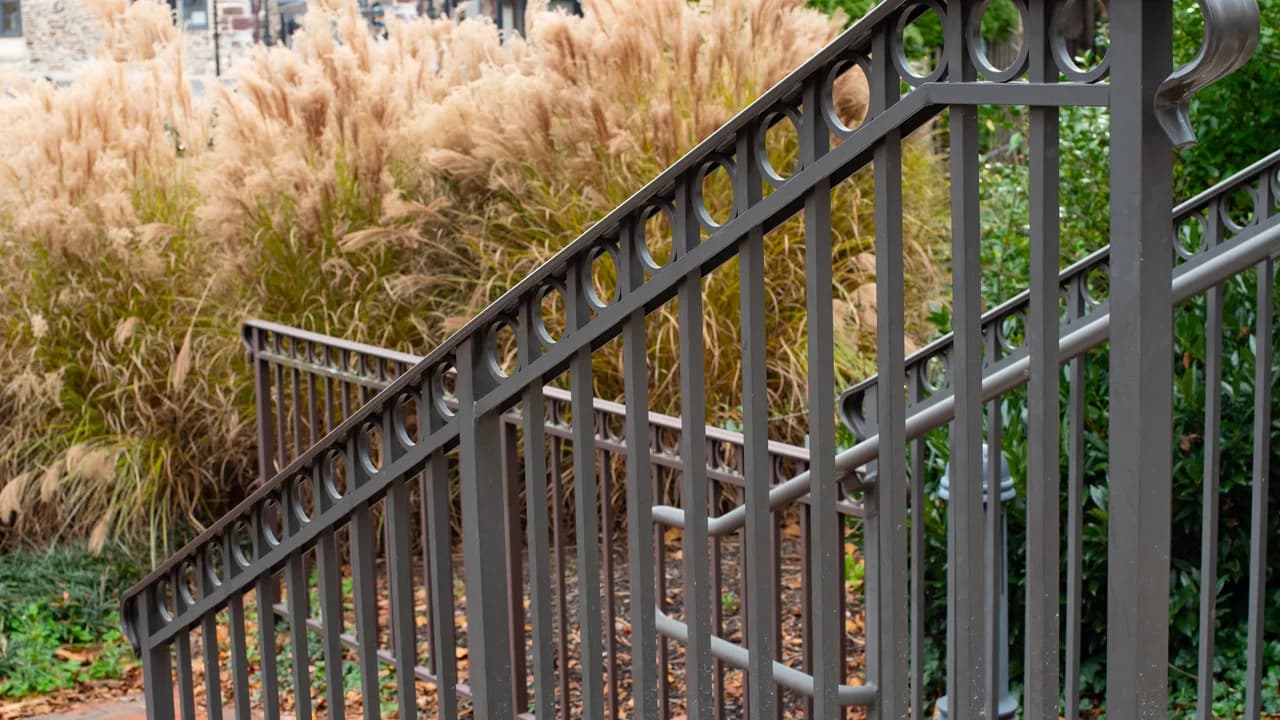
Quick answer: In Massachusetts, the deck railing height code for a new or replacement guard is at least 36 inches on a residential deck, measured from the deck surface to the top of the rail. For commercial or multi-family properties, that jumps to 42 inches. A guard is only required when the walking surface sits more than 30 inches above the ground or floor below — but when it's required, the height, spacing, and anchoring all have to be right or it fails inspection.
Massachusetts new-construction and permitted work falls under 780 CMR, the state building code, which follows the IRC for one- and two-family homes. Below is what those numbers actually mean for your deck or porch — and why an exterior iron rail lives or dies on how it's anchored.
Your local building department has the final say. Worcester and Boston inspectors can and do interpret the details differently — confirm the exact requirement before anything gets fabricated or set.
When a deck guard is even required
Not every deck needs a guard. The trigger is height: under 780 CMR, a guard is required wherever the deck, porch, or landing surface is more than 30 inches above the grade or floor below, measured within a set horizontal distance of the edge.
So a low ground-level deck a foot off the lawn may not legally need a guard at all. Raise that same deck onto posts — a second-story porch, a walkout over a sloped Worcester backyard, a Boston triple-decker porch — and the guard becomes mandatory. If any point along the edge clears that 30-inch line, plan on a guard for the whole open side.
Two heights matter here, and people mix them up:
- Guard — the barrier around the open perimeter of the deck. 36 inches residential, 42 inches commercial/multi-family, from the deck surface to the top of the rail.
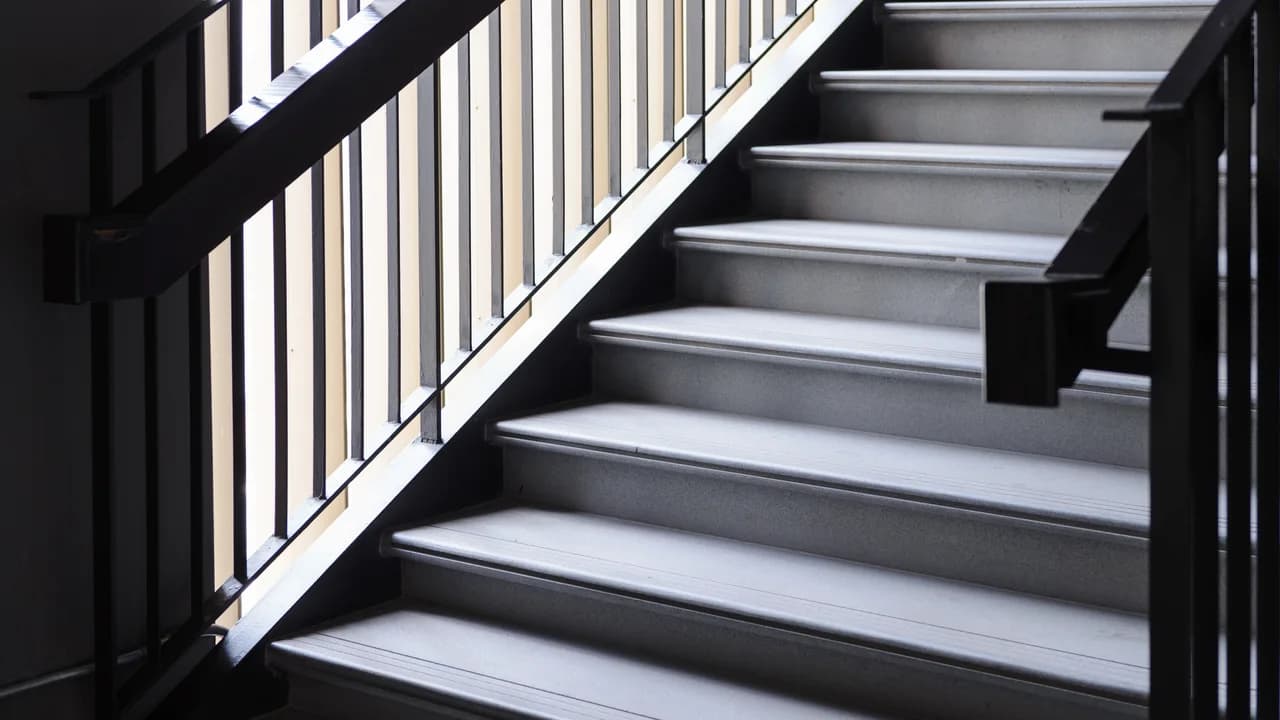
- Handrail — the graspable rail alongside the deck stairs. It runs 34 to 38 inches above the stair nosing and is required on any run of 4 or more risers, on at least one side.
A deck with stairs usually needs both: a 36-inch guard around the platform and a 34–38-inch graspable handrail down the steps. They're different jobs with different numbers.
The 4-inch-sphere spacing rule in plain English
Height keeps people from going over. Spacing keeps kids from slipping through. The code test is simple: on new work, the openings in a guard must be small enough that a 4-inch sphere cannot pass through. Balusters, panels, cable, decorative scrollwork — whatever the infill is, no gap can let a 4-inch ball through anywhere in the guard.
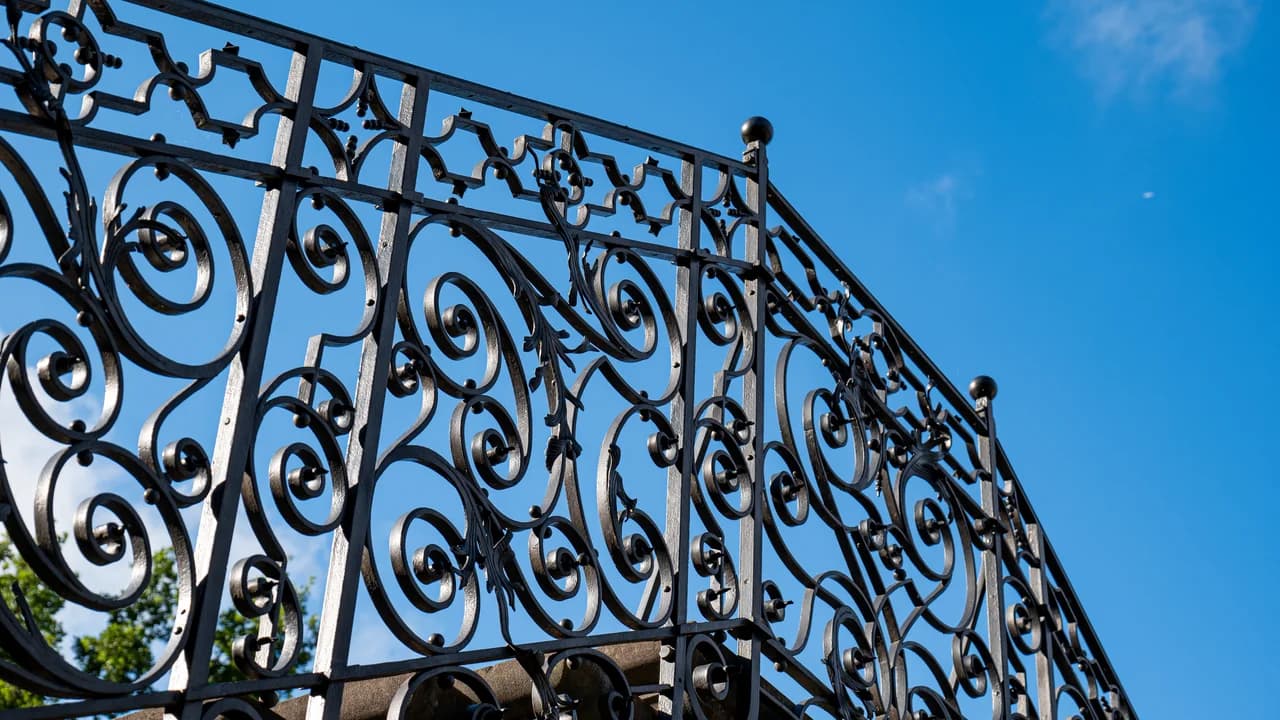
For traditional vertical iron balusters, that generally means centers around 4 inches apart or tighter. The spots inspectors actually check are the easy-to-miss ones: the triangle at the base of stairs, the gap between the bottom rail and the deck, and the space beside a newel post. Those are the openings that quietly fail an otherwise clean-looking rail.
Porch, deck, balcony — same code family
Whether you call it a porch, a deck, a balcony, or a landing, the guard rules come from the same place. If the walking surface is more than 30 inches up, you need a guard at 36 inches (residential) or 42 inches (commercial), passing the 4-inch-sphere test. A wraparound farmer's porch in Worcester and a rear balcony on a Boston condo answer to the same numbers — only the residential-vs-commercial line changes which height applies. If you're still settling on a look before you worry about the code, our porch railing ideas for Massachusetts homes post is a good place to gather styles first.
One Massachusetts nuance worth knowing: an existing railing is judged under the more lenient 105 CMR 410 State Sanitary Code (guards as low as 30 inches, or 34 inches post-August-1997, with wider allowable spacing). An old porch rail can be perfectly legal as-is. But the moment you replace it or build new, you're on 780 CMR — the tougher numbers above. "It matched the old one" is not a passing answer for new work. We cover this split in more depth in our stair railing height guide.
Footings and attachment: where an exterior iron rail lives or dies
Getting the height right is the easy part. In New England, the guard that fails isn't usually the one that's too short — it's the one that works loose. A guard has to resist a real horizontal load without flexing, and here that load fights the weather.
Freeze-thaw is the enemy. Water gets under a shallow footing or a surface-bolted post, freezes, expands, and heaves. Do that over a few Worcester winters and a rock-solid post starts to wobble. The durable play is posts carried below the frost line or through-bolted into solid framing — the rim joist, a doubled post, real structure — not lag screws into decking that will loosen as the wood cycles wet and dry.
This is exactly the kind of spec where matching with the right pro pays off: the correct footing depth, the right blocking behind the post, the fasteners that won't back out. Get it wrong and it's not just a failed inspection — it's a safety rail you can't trust.
Not sure whether your posts can carry a code-compliant guard? Start a free estimate and the vetted local pro we match you with will assess the framing before quoting the rail.
Exterior finish: beating road salt and coastal rust
An interior rail can get away with a lot. An exterior one can't. Inland Massachusetts means road salt splash and snowmelt; the Boston shoreline and harbor-side neighborhoods add salt air that finds every unprotected edge. Bare or thinly painted iron rusts from the inside of the joints out, and a rusting guard is a weakening guard.
The finishes that hold up outdoors here are hot-dip galvanizing and/or powder-coat over properly prepped steel, with attention to the welds and post bases where water pools. When you request an estimate, the matched pro specs a finish suited to your exact location — an exposed coastal Boston balcony gets a different answer than a sheltered Worcester back porch.
Getting it permitted and passed
Replacing or building a deck guard is permitted work in Massachusetts, which means an inspection against 780 CMR. A clean pass comes down to a short checklist: correct guard height (36" or 42"), a graspable 34–38" handrail on any 4+ riser stair, no gap that passes a 4-inch sphere, and posts anchored so the whole assembly doesn't move under load.
The pro we connect you with handles this end to end — confirming the residential-vs-commercial height with your inspector, pulling the permit, fabricating to code, and setting the anchoring so it survives the freeze-thaw cycle. You don't have to become a code expert to get a rail that passes.
One thing to verify up front: whether your project reads as 36-inch residential or 42-inch commercial/multi-family. Triple-deckers, condos, mixed-use, and rental configurations can push you into the 42-inch requirement. Confirm it with your local building department — Worcester and Boston both have the final call — before any steel is cut.
Get a deck railing that clears code and survives New England
Mass Ironworks doesn't fabricate or install — we match you with vetted, independent local ironwork pros who do, across Worcester, Boston, and the rest of the Commonwealth. Tell us about your deck or porch and we'll connect you with a pro who specs the right height, the right spacing, the right anchoring, and a finish built for road salt and coastal air — then pulls the permit and gets it inspected.
Typical MA iron railings run a $700–$3,500 ballpark; your matched pro confirms the exact price after an on-site measure. Start your free estimate and get a deck rail that passes the first time.
Related: Iron Railings in Massachusetts · Stair Railing Height & Code
Ready to start your project?
Get an exact price for your ironwork project in under two minutes.
Get my fast estimate